
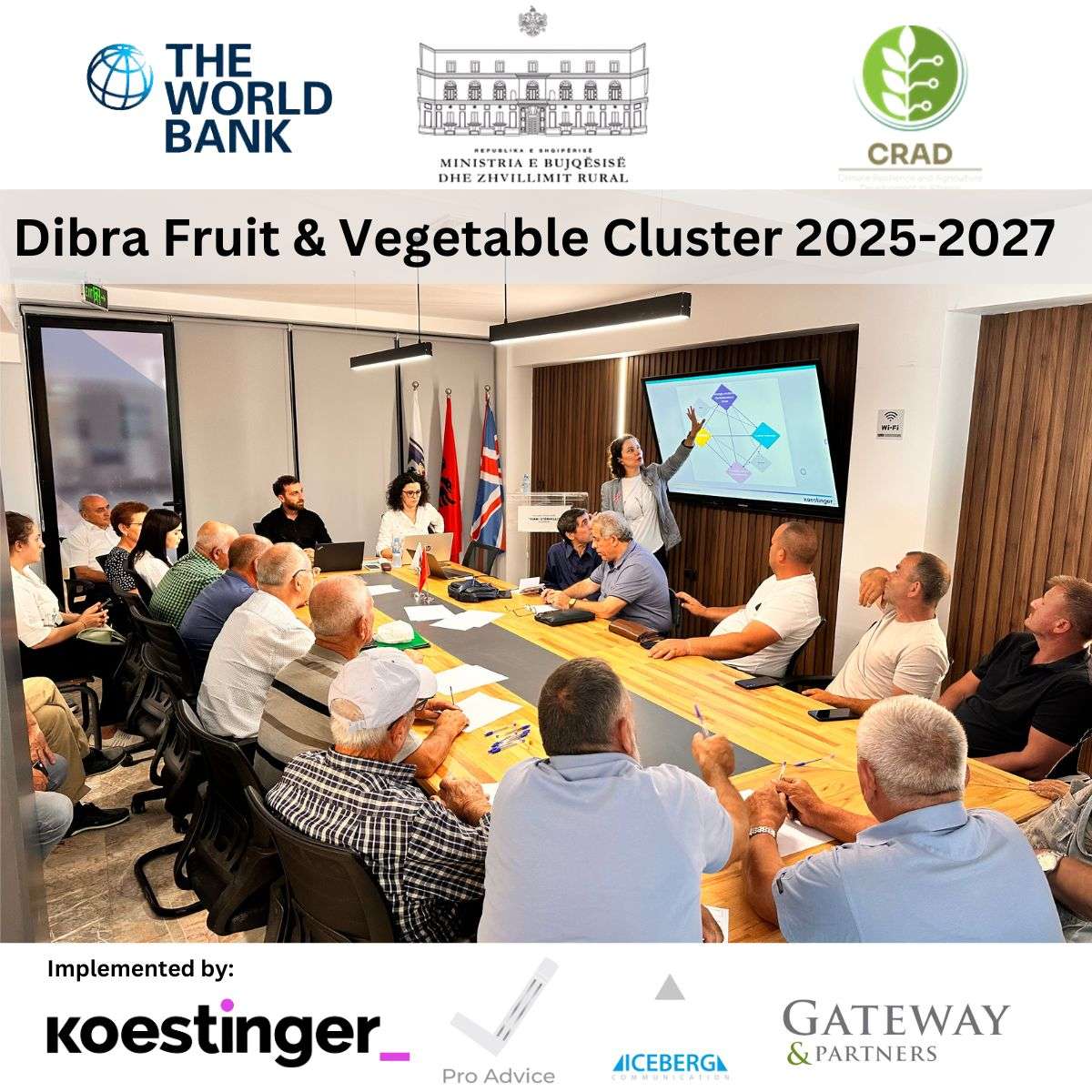
Support for the Establishment and Medium-Term Operation of a Fruit and Vegetable (F&V) Cluster in the Dibra Region, including the Branding of Selected Products and their Placement on the Market
The Dibra Fruits and Vegetables Cluster project, supported by the World Bank and implemented in partnership with the Ministry of Agriculture and Rural Development of Albania, will run from May 2025 to April 2027. The project aims to strengthen the competitiveness and sustainability of the fruit and vegetable sector in the Dibra region by supporting the creation and medium-term operation of two clusters and improving the market positioning of local products. By fostering collaboration among farmers, processors and local institutions, the project seeks to promote sustainable regional development while increasing resilience to climate change and advancing quality standards in agriculture.
The Dibra Fruit & Vegetable Cluster Project description May 2025 -May 2027
Dibra Fruit Cluster

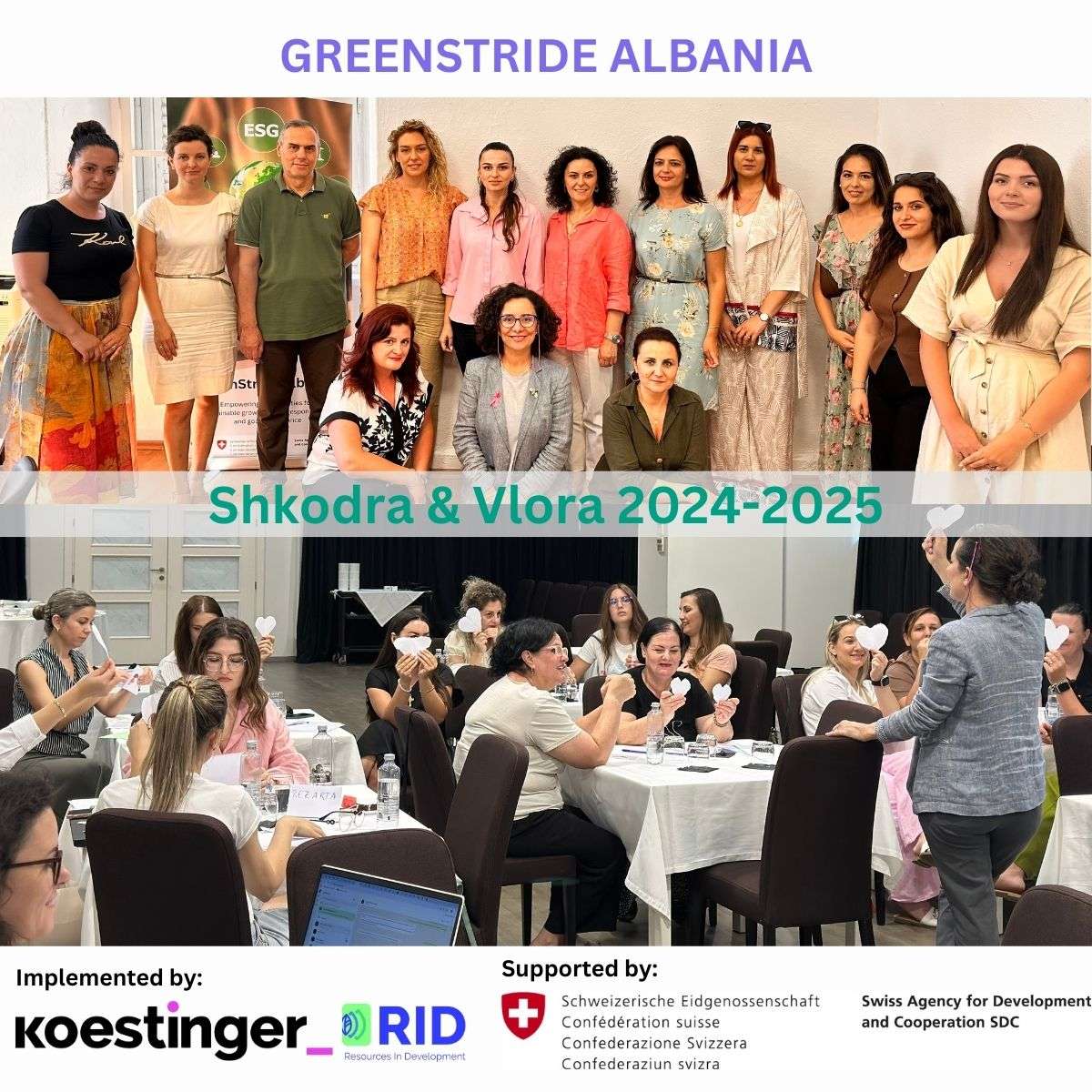
Greenstride Albania-Empowering communities for sustainable growth, social responsibility, and good governance
The GreenStride Albania project, co-financed by the Embassy of Switzerland in Albania, was launched in October 2024. The project seeks to empower municipalities and local businesses in Shkodra and Vlora by strengthening their understanding and application of Environmental, Social, and Governance (ESG) principles. Through surveys, focus groups, training activities, and innovation programs, the project promotes sustainable practices, social responsibility, and transparent governance. Its ultimate goal is to build stronger local capacities, foster collaboration between the public and private sectors, and accelerate Albania’s transition toward a greener and more inclusive future.
GreenStride Project description Sept 2024 -Dec 2025
The GreenStride Albania was implemented by Koestinger Consulting Albania in partnership with Resources in Development and in close cooperation with the Municipalities of Shkodra and Vlora, and co-financed by the Embassy of Switzerland in Albania. The project aimed to strengthen the adoption of Environmental, Social and Governance (ESG) principles among local governments and SMEs in Albania by promoting sustainable practices, responsible governance, and innovative collaboration models. The project focused on two pilot cities, Shkodra and Vlora, supporting municipalities and local businesses in increasing their awareness, capacity, and readiness to implement ESG-aligned strategies and contribute to Albania’s green transition in line with national and EU sustainability frameworks.
The main aims of the project were:
- Strengthen ESG awareness and readiness among municipal staff and SMEs in two pilot cities through evidence-based assessment and participatory dialogue.
- Promote sustainable development, social responsibility, and good governance at local level by fostering collaboration between public institutions and the private sector.
- Build practical capacities of municipalities and businesses to integrate ESG principles into planning, service delivery, and business operations.
- Support local green transition processes in line with Albania’s National Strategy for Development and Integration 2022–2030 and the Green Agenda for the Western Balkans.
- Develop and test innovative local solutions to environmental, social, and governance challenges through structured co-creation and acceleration processes.
- Create replicable pilot models for ESG capacity building and innovation at municipal level in Albania.
Services provided by Koestinger Consulting
Designed and implemented an integrated ESG capacity-building and innovation model including the following interventions:
- Conducted a comprehensive ESG Awareness and Readiness Study among municipal staff and SMEs in Shkodra and Vlora
- Organized and facilitated Focus Groups to validate survey findings and identify local ESG priorities and challenges
- Designed and delivered ESG Bootcamps in both municipalities combining training, systems thinking, and collaborative problem-solving
- Designed and implemented two pilot ESG Innovation Accelerators bringing together municipalities, businesses, and community actors through human-centered design methodologies
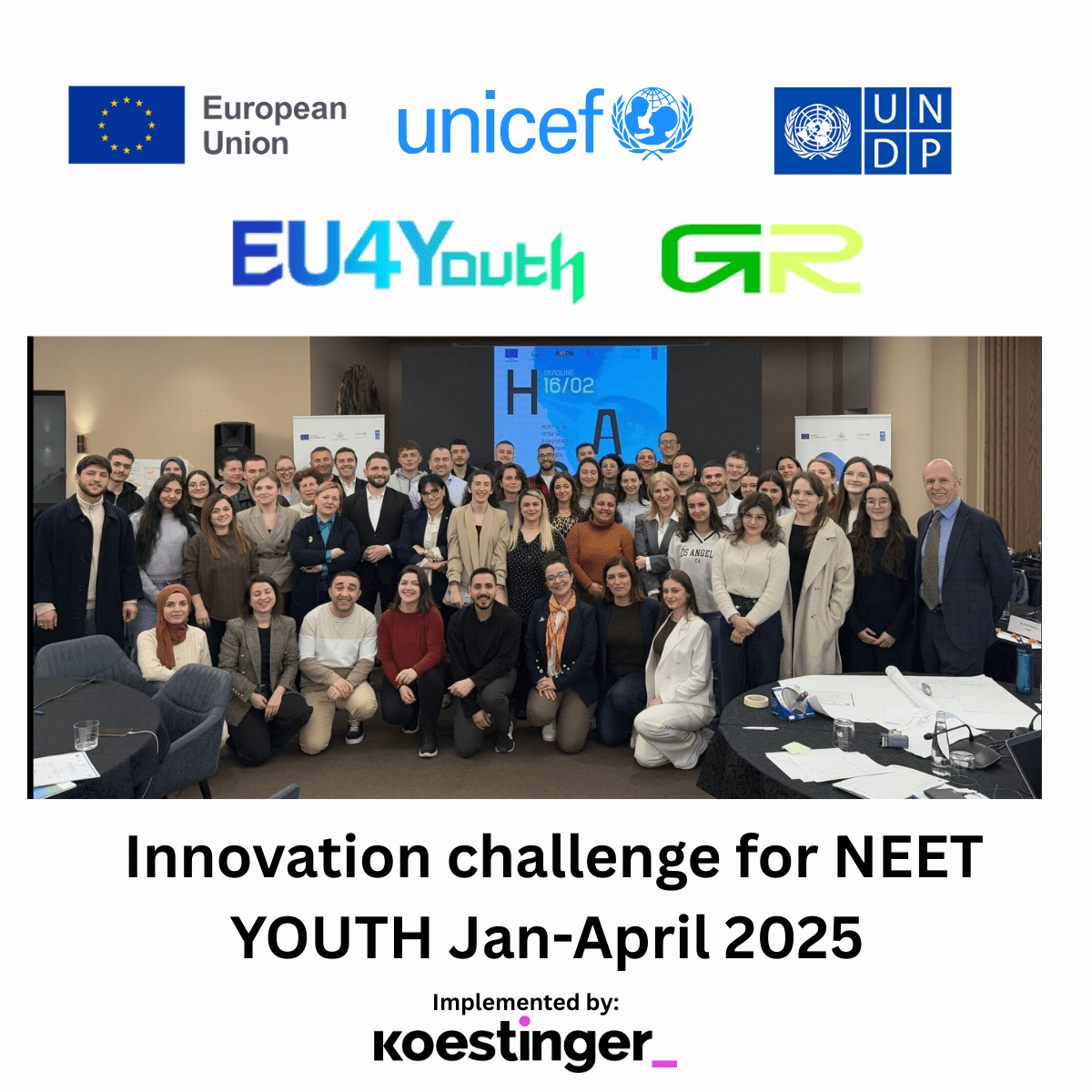
Innovation Challenge for NEET YOuth
The Innovation Challenge for NEET Youth was implemented in 2025 by Koestinger & Partners for UNDP Albania within the EU4Youth framework, aiming to support local partnerships in Tirana, Shkodër, and Vlorë to co-design innovative services for young NEETs. Through a structured, human-centered design process combining online onboarding, a two-day hackathon, regional design workshops, and validation sessions, the project brought together public institutions, NGOs, and youth to develop practical and scalable solutions addressing outreach, pre-placement, and post-placement support.
Innovation Challenge for NEET Youth—January–April 2025
The Innovation Challenge for NEET Youth was implemented in early 2025 by Koestinger & Partners for UNDP Albania within the EU4Youth framework, with the objective of supporting local partnerships to design innovative, inclusive solutions for young people not in education, employment, or training (NEETs) in Tirana, Shkodër, and Vlorë. The initiative responded to persistent youth inactivity challenges in Albania and directly contributed to the implementation of the Youth Guarantee by strengthening collaboration between municipalities, employment offices, educational institutions, and civil society organizations.
The project was delivered through a structured, participatory methodology grounded in Human-Centred Design. It followed four sequential phases designed to guide stakeholders from problem exploration to solution validation. The first phase focused on online onboarding and preparation, during which participating organizations were introduced to the Youth Guarantee framework, the objectives of the challenge, and human-centred design principles. Collective onboarding sessions were organized for each target city, complemented by individual consultations and preparatory homework assignments aimed at building a shared understanding of service design and NEET youth needs.
The second phase consisted of a two-day in-person hackathon, which brought together representatives of public institutions, NGOs, and young people to collaboratively identify challenges and co-create solutions. Participants worked in multidisciplinary teams to pitch ideas, form groups around priority issues, and develop early service concepts addressing outreach, employability, self-employment, inclusion of vulnerable groups, and access to training. The hackathon emphasized rapid ideation, prototyping, and pitching, supported by expert facilitation and mentoring.
Following the hackathon, selected teams advanced to the third phase, which comprised regional design challenges held in Tirana, Shkodër, and Vlorë. These one-day workshops applied the full Human-Centred Design cycle, including empathy work with detailed NEET youth personas, problem definition, ideation, prototyping, and peer testing. Teams refined their service concepts to better reflect local realities and the specific needs of diverse NEET profiles, such as young parents, rural youth, persons with disabilities, and marginalized communities.
The final phase focused on validation and refinement. Participating organizations took part in structured online consultation sessions to test feasibility, clarify user journeys, and strengthen alignment with the Youth Guarantee framework. Through iterative feedback and expert guidance, a total of 14 service prototypes were finalized, offering concrete, context-sensitive solutions ready for potential piloting or further development.
Through the completion of all planned tasks, including onboarding, facilitation of the hackathon, regional workshops, validation sessions, and comprehensive reporting, the Innovation Challenge strengthened local capacities for partnership-based service design and innovation. The project delivered a replicable model for co-designing inclusive NEET services and laid the groundwork for future piloting, funding, and integration of the developed solutions into local and national youth employment support systems.

GESI ESS
The GESI
GESI ESS Sept 2024 -April 2025
GESI ESS

SUSRUR-Towards SUStainability for tourism SMEs in RUral & Remote Areas- Accelerator for tourism SMEs
The SUSRUR (Towards SUStainability and resilient scenarios for tourism SMEs in RUral & Remote Areas) project, co-funded by the European Union launched in January 2023. The project aims to support SMEs from 5 rural & remote areas of Europe (Asturias region (Spain), Western Macedonia region (Greece), Harghita county (Romania), Utena (Lithuania), Steirisches Vulkanland (Austria), by promoting sustainability and innovative practices & strategies while providing tools and skills to strengthen their competitiveness in a post COVID-19 scenario, increasing their awareness and capacity to accelerate and implement the twin green & digital transitions.
SUSRUR Project description Jan 2023-Dec 2025:
The SUSRUR project aims to support SMEs from 5 rural & remote areas of Europe (Asturias region (Spain), Western Macedonia region (Greece), Harghita county (Romania), Utena (Lithuania), Steirisches Vulkanland (Austria)), by promoting sustainability and innovative practices & strategies while providing tools and skills to strengthen their competitiveness in a post COVID-19 scenario, increasing their awareness and capacity to accelerate and implement the twin green & digital transitions.
The consortium of the project:
Kaunas University of Technology (Lithunia) as coordinator , Koestinger & Partners (Austria), F6s Network Ireland Limited (Ireland), Asociatia de Dezvoltare Intercomunitara Harghita (Romania), Entrepreneurship Support Foundation – JOIN4CS (Greece), Espacio Tormaleo S.L. (Spain)
The main aims of the project are :
1)Support SMEs from 5 rural & remote areas of Europe (Asturias, Western Macedonia, Harghita, Utena, Steirisches Vulkanland) by promoting sustainability and innovative practices & strategies.
2) Provide tools and services to strengthen the competitiveness of at least 100 SMEs within rural & remote areas in a post COVID-19 scenario
3) Increase the awareness and capacity of SMEs in rural & remote areas to accelerate the twin green & digital transitions.
4) Develop suitable pathways and scenarios for recovery by promoting sustainability from the economic, social and environmental perspectives following the SDG’s principles
5) Develop comprehensive sustainable business models for tourism SMEs in rural areas, setting up
sustainability as a core business principle in their operation
6) Increase the awareness of tourism SMEs in sustainability as a marketing tool that could improve substantially the attractiveness of a tourism business or a destination.
Services provided by Koestinger & Partners
- Designed and implemented an Accelerator model tailor-made for the needs of tourism SMEs The accelerator will involve the following interventions:
- Live Lab’s– 7 sessions
- Diagnostics – 2 sessions initial and final diagnostics.
- Touchpoints Office Hours -5 sessions (Scheduled 1 hour before each live LAB; 5 x 60 min)
- Touchpoints Mentors – 5-10 sessions up to 10 hrs with co-pilots and 5 hrs with skills mentors (depending on the needs and the stage of the ventures)
- Learning Journey– 2-3 sessions (Sharing Best-Practises “Coffee with XY”)
- Peer to peer sessions 2-3 session per venture with a focus area
- DEMO Day – 1 session (ventures will pitch their idea in a “shark tank” style in 5min and get feedback from the Sounding Board
- Online interactive community in slack
- Selected and onboarded the mentors
- Appointed selected applicants to relevant experts/mentors
- Monitored the progress of deliverables
- Prepared reports
- Communication and dissemination activities

Impact Coaching program for SME and Startups of the Vienna Business Agency
Do you want to solve a social or ecological problem with your company? Do you have an idea for making better use of resources?
In impact coaching, our experts advise you free of charge on behalf of Vienna Business Agency so that your company can act more sustainably. Our team of coaches and management consultants are available to you for four hours. Get support to implement your idea.
Impact Coaching Project description Jan 2023- Dec 2026 ( framework contract 4 years)
This is a framework contract of 4 years form the city of Vienna and Koestinger will be Coaching and mentoring startups and MSME that want to design sustainable and impactful business models.
The objective of this contract is to help early-stage founders and young entrepreneurs in Vienna, in the pre- founding phase, founding phase or after-founding phase up to five years after founding, through modern approaches, tools, methods, and knowledge, to make their business models sustainable and with a positive impact right from the start.
In this way the founders/ companies will be able to realize their growth aspirations within the planetary boundaries and create ecologically and socially positive start-ups and companies.
To do this, Koestinger developes together with the Startup Services department of the VBA, holistically bespoke and target group-specific offers in the following domains:
Ecological topics:
- Circular economy: business model & product development
- Resource conservation & material efficiencies
- CO2 emissions & calculation
- Life cycle calculations
- Avoidance of rebound effects
- Using SDGs as a framework for businesses
- Impact analyzes & impact measurements
- Funding and financing
- Impact frameworks and models for founders;
- Trends and regulations at national, EU and international levels
Social topics:
- Fairtrade along the value chain
- Diversity Equity and Inclusion in the founding team
- critical questions in the areas DEI participation/inclusion and equal opportunities
- Team development & team culture with impact
- Create inclusive and high-quality jobs
- Power skills: Mental health & stress management for founders
- Theory of change ( Wirkungslogik)
- Social-Ecological Costs & Benefits
- Impact Marketing / Green Marketing / Inclusive Marketing
The coaching is delivered in German and English form our pool of 10 multidisciplinary coaches with complementary skills and covers these three areas:
1.Coaching to create ecologically and socially sustainable business and financing models
2.Support in achieving a positive social impact and social responsibility:
- Support in the implementation of a social impact analysis and/or the pursuit of a positive social and ecological impact and footprint during start-up phase and growth as well as the development of an plan of with steps and recommendations
Coaching is intended to bring impact into the company, which can be different topics, that’s why we have put together a very broad team with the appropriate expertise.
As there are only 4 hrs available for each company the coaching sessions are very focused and efficient.
We base our coaching approach on Valerie Lim’s Entrepreneurship Coaching model, a further development of the GROW model and specifically designed for entrepreneurship. The focus is on developing a viable business idea, so a reality check (are there enough resources, customer needs, etc.) or other options are questioned. Then it’s about creating an action plan and implementing it. A review is intended to support the coachee with challenges.
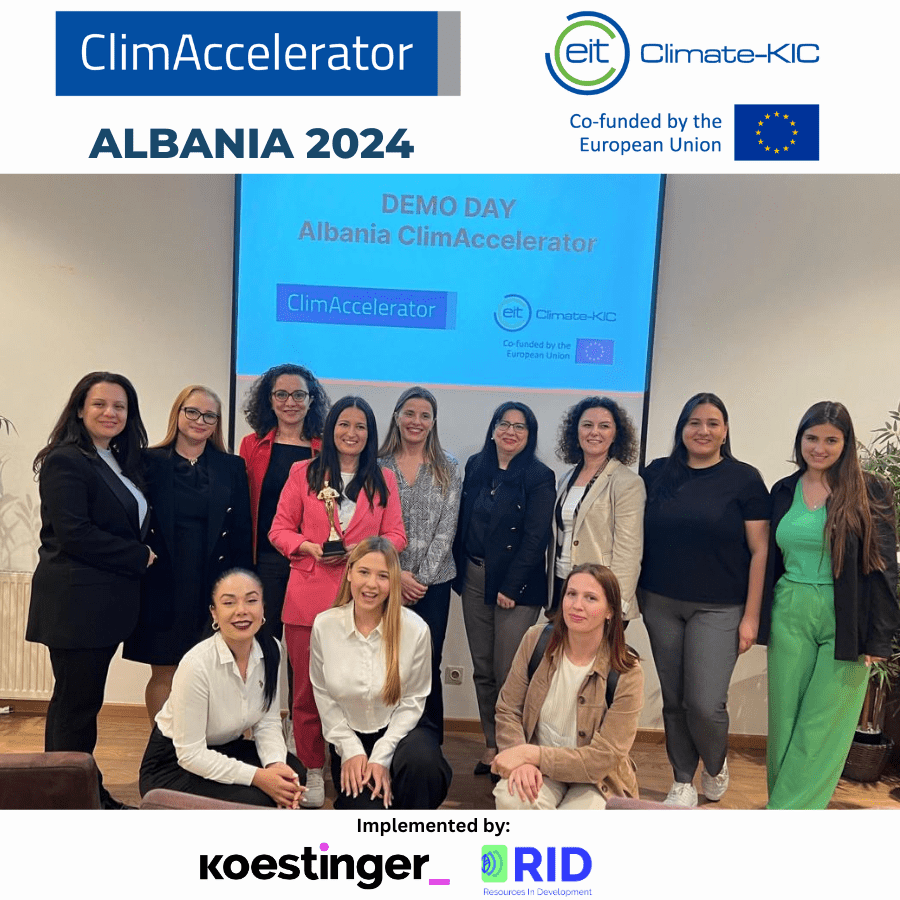
Clim Accelerator Albania
ClimAccelerator Albania was a four-month climate acceleration programme implemented by Koestinger Consulting in partnership with EIT Climate-KIC as part of the global ClimAccelerator initiative. The programme supported eight early-stage Albanian start-ups working on decarbonization, circular economy, energy efficiency, and resource efficiency through a structured acceleration journey combining innovation labs, mentoring, expert support, and pitching.
Clim Accelerator Albania Project description Jan 2024- April 2024
ClimAccelerator Albania was a climate-focused acceleration programme implemented by Koestinger Consulting in partnership with EIT Climate-KIC and delivered as part of the global ClimAccelerator initiative. The programme was implemented between January and April 2024 and targeted early-stage founders and start-ups in Albania working on climate solutions related to decarbonization, circular economy, energy efficiency, and resource efficiency.
The main objective of ClimAccelerator Albania was to strengthen Albania’s emerging climate innovation ecosystem by supporting high-potential start-ups in developing, validating, and scaling impactful climate solutions. The programme aimed to enhance the technical, business, and impact-readiness of participating teams while connecting them to European innovation ecosystems, expert networks, and systems innovation tools in line with EIT Climate-KIC’s mission to drive systemic change and measurable climate impact.
ClimAccelerator Albania supported a cohort of eight early-stage founders and start-ups through a tailored package of in-kind support combining training, mentoring, innovation labs, and pitching support. The structured curriculum was organized into six thematic innovation labs, Discover, Validate, Impact, Build, Shine, and Pitch, guiding participants step by step from problem identification and solution validation to impact assessment, business development, and investor readiness. The programme concluded with a public Demo Day, where start-ups pitched their solutions to mentors, experts, and relevant stakeholders.
Throughout the programme, participating teams benefited from intensive engagement with Albanian and European industry experts, online and offline workshops, innovation labs, learning journeys, and “roasting” sessions designed to challenge assumptions and strengthen solution robustness. In addition, the cohort gained access to the EIT Climate-KIC network, including visibility, communication support, and tools such as the Climate SAFE framework, contributing to the strengthening of both individual ventures and the broader climate-tech ecosystem in Albania.

Strong Businesses &Communities for Moldova
Strong Businesses and Communities for Moldova Project description Jan 2024- April 2024
Moldova

SDG Innovation LAB Vienna- Accelerator for Viennese SME
The SDG Innovation Lab is an interactive and intensive support program designed in the form of a business accelerator for Viennese SMEs that are willing to design sustainable products and services aligned with the SDGs ( the Sustainable Development Goals) and be innovative like a startup.
SDG Innovation Lab Project description:
The Vienna SDG Innovation Lab is a 5 month accelerator-like programme for Viennese SMEs supported by the OeKO Business Vienna and designed and facilitated by Koestinger & Partners ( former Koestinger Consulting). It ran two cohorts in 2021 and 2022 aiming to demonstrate how the SDGs can be incorporated and operationalized in a business innovation context, following commercial gains while making a significant positive impact on the goals.
It was the first of its kind because it was focused solely on SMEs struggling in the post-COVID crisis. It aimed to help SMEs design new products and business models and to demonstrate that the SDGs can be integrated and operationalized in a business innovation context by designing solutions that are technologically feasible, environmentally benign, culturally acceptable, and economically profitable.
The program covered the following main topics:
- Development of a new product concept incorporating the SDGs
- Identification of future customer needs
- Expansion of the business model
- Supply chain analysis, collaboration with other companies
- Networking – through joint workshops, experts, coaches and co-pilots
- Responsible marketing of new producst
The individual company objectives were very diverse and ranged from plastic recycling and reduction, waste reduction, circular economy models, energy saving and energy optimization, CO2 reduction, new materials, smart farming, mobility, slow fashion and they come from different industries.
With a combination of innovative techniques like design thinking, sprint design, business model canvas, customer discovery and validation, empathy map and personas, sustainable product design, the business case for sustainability, storytelling and pitching, impact models, the SDGs, lean startup and other innovative tools that startups use, the participating SMEs are guided and coached to innovate fast and design sustainable products and services like a startup.
A great part of the program is dedicated to the one2one mentoring and coaching form purpose-driven mentors with aim of bringing together different perspectives that can help challenge and validate their new solutions/ products.
In 2021 15 Viennese companies participated SDG innovation LAB . In 2022 7 Viennese companies have participated in the SDG innovation LAB. The accelerator was implemented by Koestinger and co-financed by OeKO Business Vienna.
CleanTech Accelerator -Africa
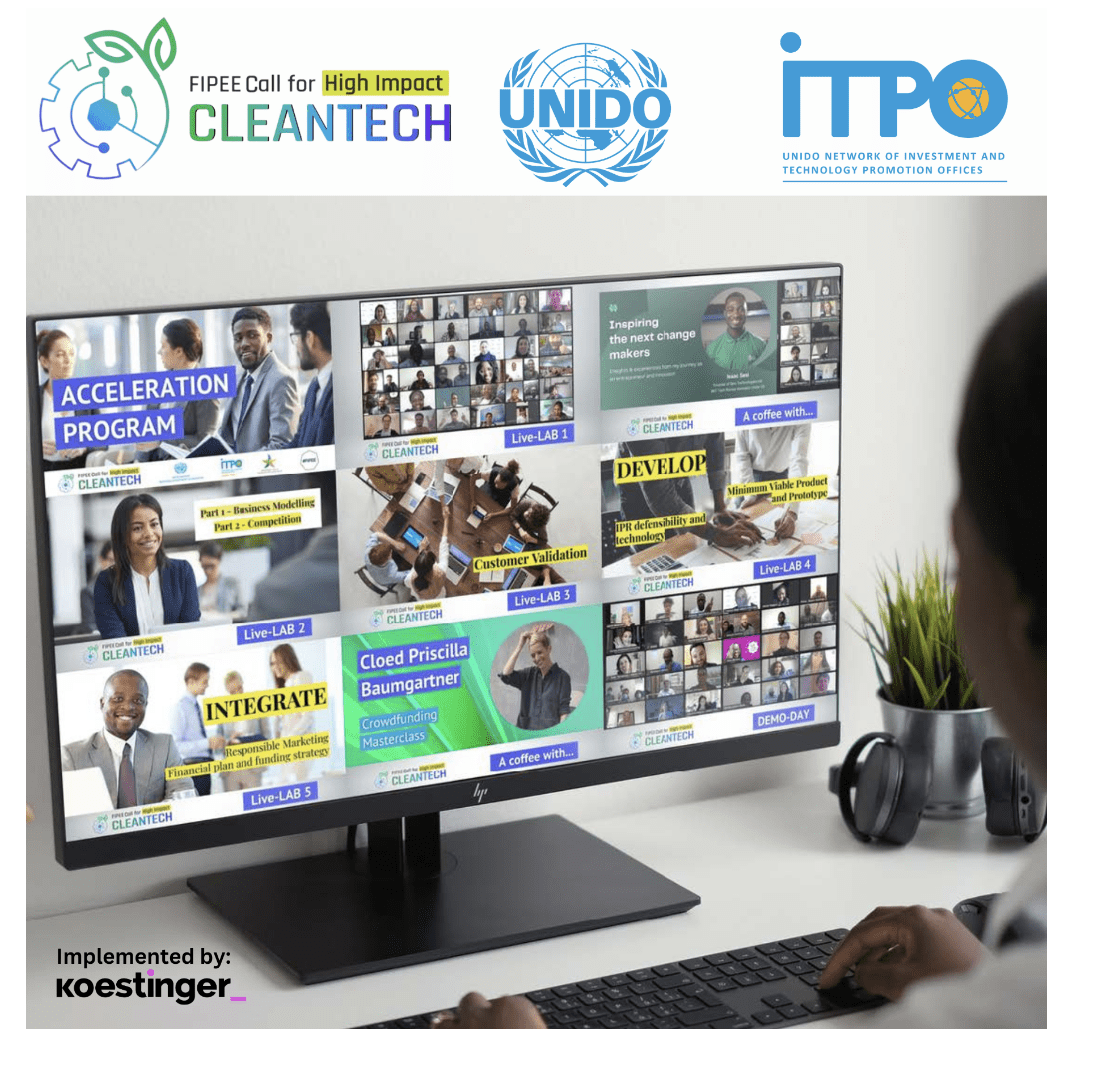
The UNIDO ITPO Italy’s FIPEE Call is a remote acceleration program in English and in Spanish, aimed to accelerate 25 high-impact cleantech solutions, innovations and projects of MSMEs and startups from Botswana, Cuba, Ethiopia, Kenya and Peru, to tackle the most urgent global issues in energy and environment and ultimately contribute to UNIDO’s mandate of accelerating Inclusive and Sustainable Industrial Development.
Acceleration Programme of the FIPEE Call for High Impact Cleantech Project description Jan -April 2002
The #FIPEECall , organized within the framework of the project “Fostering international partnerships between companies and/or institutions operating in the energy and environment sectors” (FIPEE), funded by the Italian Ministry of Ecological Transition and implemented by UNIDO ITPO Italy, aims to identify, accelerate and promote high-impact cleantech solutions and innovations, in order to address the adverse effects of climate change and ultimately contribute to inclusive and sustainable industrial development.
A 3,5 months Acceleration Programme for 25 selected Small and Medium-sized Enterprises (SMEs) and Start-ups from Botswana, Cuba, Ethiopia, Kenya and Peru that had the opportunity to take part in the coaching and training activities of the to improve their business model and investment readiness.
Priority was given to the following technology categories: Renewable Energy, Water Efficiency, Water Treatment, Energy Efficiency, Waste Management, Green Transport and Green Building, Climate Mitigation and Adaptation, Forest Management and Conservation, Soil Remediation, Treatment and Disposal of Inert, Sustainable and Smart Agriculture, and Circular Economy.
In order to boost their investment readiness and business competitiveness, the selected MSMEs and startups received the following benefits:
– Tailored business acceleration coaching, mentoring, and training
– Opportunity to showcase their technology innovations and solutions at upcoming international events
– Matchmaking services with investor networks, commercialization partners and government procurement offices
– Curated peer networking with other MSMEs and startups
– Communication support for enhanced visibility Participation in the initiative is free of charge.
Delivered by Koestinger, the Acceleration Programme of the FIPEE Call for High Impact Cleantech was carried out successfully throughout the months of January and April 2022 in English and in Spanish. The accelerator featured 6 Live-Labs as well as multiple special sessions with international mentors, entrepreneurs and top guests sharing their experiences, success cases and best practices.
During the concluding Demo-Day on 20th April, all MSMEs and startups who attended the course delivered their best business pitch to the Jury Members of the Acceleration Programme , including MiTE, GCIP and the business acceleration mentors, who eventually selected the five winners of the FIPEE Call, one for each target country.
Marine Litter Prevention Wester Balkans- mentoring program in the Western Balkans.
A mentoring program designed specifically for enterprises registered in Albania, Bosnia and Herzegovina, Kosovo, and Montenegro on plastic reduction and recycling, B2B meetings and Study Visit to Austria
Mentoring program for SMEs- Marine litter prevention Project description Nov 2022- June 2024
The overall project goal is the improvement of business planning and operations in plastic waste reduction of recycling of local businesses (SMEs and Startups) in Albania, Bosnia and Hercegovina, Kosovo and Montenegro.
The specific objective of this project was that by the end of this contract, in four partner countries, a total of at least 16 start-ups / small and medium enterprises (including two women-owned enterprises) have implemented first steps of their business models based on plastic waste reduction or recycling strategies.
Services provided by Koestinger & Partners:
- Design and develop a concept for a gender-sensitive ideas competition to achieve the project objectives– Design the full set of open call for proposal; launch and disseminate
- Implementation of the gender-sensitive ideas competition for SME/start-ups in four countries in cooperation with national associations and supported by national experts.
- SMEs participate in the open call (potentially define a clear goal as part of their applications) Selection process and tailored advisory services based on the industry
- Provide in-depth one on one advisory for the selected small and medium enterprises ensuring tangible results and documented impact with participating SME/start-ups.
- Perform 3 company On-site visit to each country with individual diagnosis process /the current situation/business stage are assessed, Contribution to review and/or design of company factsheets per each country,
- Individual one-on-one advisory services in light of concluding the accelerator and delivering the Plan of Implementation steps
- Organising a Study vist to Vienna for 2 companies per country

ExportStars certification Program- Accelerated learning
For rookies and more advanced export enthusiasts, ExportStars is an global educational program and international community offering export education as well as a variety of on-demand self learning courses on international and sustainable trade, import-export management and export consultancy
ExportStars Project Description May 2021 – August 2021
In 2021, ExportStars implemented its first specialization course in Sustainable Export Management in Albania, marking the launch of its educational and ecosystem-building activities in the country. The project was delivered with the support of RISIAlbania, an innovative programme supported by the Swiss Agency for Development and Cooperation, and in cooperation with the Agricultural University of Tirana. The initiative responded to the increasing demand for export-oriented skills aligned with sustainability principles and EU market requirements, particularly within Albania’s agribusiness sector.
The project aimed to strengthen practical export management capacities among graduating students and young professionals while fostering closer collaboration between academia and export-oriented SMEs. By combining structured online learning with applied, real-life business cases, ExportStars sought to bridge the gap between theoretical knowledge and the operational realities of international trade.
The specialization course was delivered as a five-week online programme and brought together around thirty graduating students from the Agricultural University of Tirana and a group of young professionals working in Albanian agribusiness companies active in export markets. The curriculum was organized into thematic modules covering export fundamentals, market and marketing research, international marketing strategies, sustainability and innovation in trade, contractual and compliance aspects, logistics and international movement of goods, regulatory frameworks, and financial considerations related to exporting. The learning process was supported through live sessions, guided discussions, and dedicated office hours with experts.
A defining feature of the project was its strong practice-based approach. Participating companies provided real export-related challenges, which were addressed by course participants through team-based project work under the guidance of experienced export and management professionals. This format allowed participants to apply newly acquired knowledge to concrete cases while enabling companies to explore potential solutions to their export challenges. At the same time, companies gained early access to emerging talent, with opportunities to further engage high-performing participants through internships or future employment.
Through this pilot implementation, ExportStars successfully tested an innovative online specialization model that connected students, professionals, and SMEs around sustainable export management. The project contributed to building export-related human capital in Albania, promoted sustainability-oriented trade practices, and laid the foundation for the further development of ExportStars as an international education platform and community focused on resilient and responsible trade ecosystems.

Entrepreneurship education in Shkodra – IGNITE University incubator by GoodStartup School
This program is designed to help students and first time founders with business ideas to develop them further. The project was implemented in 2023-2024 and funded by EU4 Innovation and GIZ Albania to strengthen the startup ecosystem in Shkodra region.
IGNITE Project Description
Entrepreneurship education in Shkodra – SPARK open accelerator Program by GoodStartup School
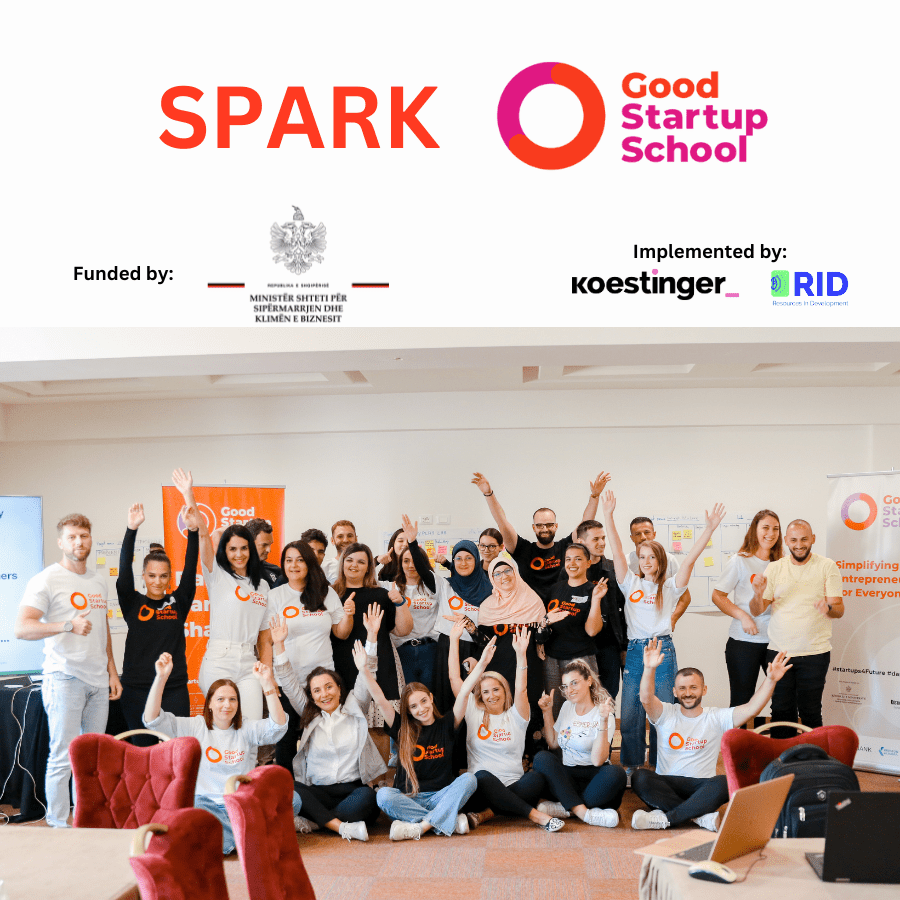
This program is designed to help young entrepreneurs, first-time founders and young people with business ideas to develop them further. The project was based on the GoosdStartup School Methodology implemented as a pilot project in 2022 with the support of the Ministry of Entrepreneurship of Albania.
SPARK Project Description
AGRO Incubator Tirana
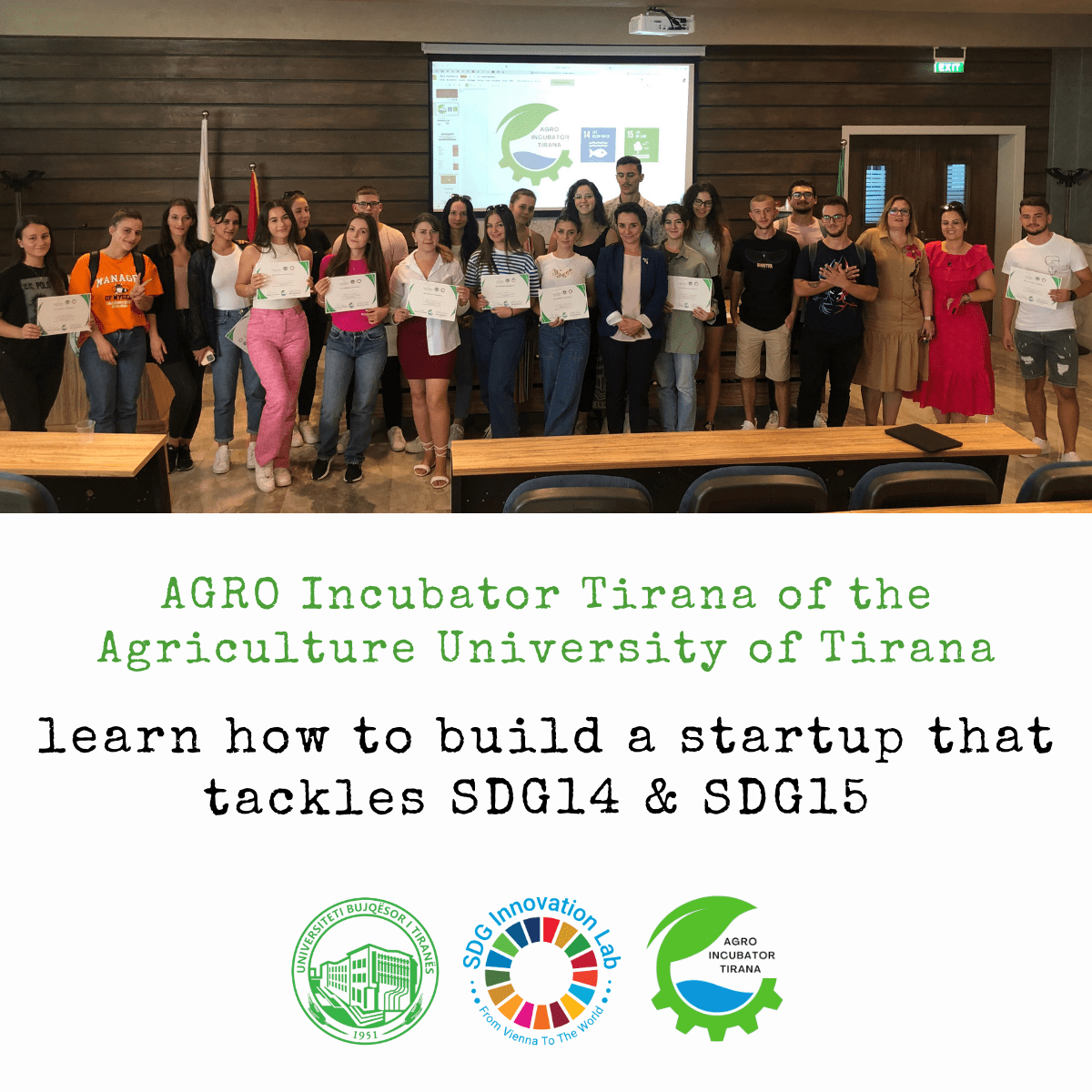
Agro Incubator Tirana was a pilot innovation programme at the Agricultural University of Tirana supporting students in developing sustainable startup ideas in AgriTech, FoodTech, VetTech, and CleanTech. Combining a 48-hour SDG-focused hackathon with a short incubator programme and mentoring, the project helped participants turn early ideas into validated concepts and prototypes while strengthening entrepreneurial and innovation skills in the agricultural sector.
Agro Incubator Tirana Project Description September – October 2022
Agro Incubator Tirana was a pilot entrepreneurship and innovation programme implemented in 2022 at the Universiteti Bujqësor i Tiranës, aiming to foster student-led innovation and startup creation in the fields of agriculture and food systems. The initiative focused on supporting students in developing AgriTech-oriented business ideas aligned with contemporary standards of sustainability, technology, and market relevance.
The programme was financially supported by the Ministria e Shtetit për Mbrojtjen e Sipërmarrjes and the Ministria e Bujqësisë dhe Zhvillimit Rural, and implemented in cooperation with the SDG Innovation Lab. It aimed to stimulate innovative solutions that contribute to increased agricultural productivity while promoting environmental protection and sustainable development.
A core component of Agro Incubator Tirana was a 48-hour SDG-focused Hackathon held on 12–13 September 2022 at the Agricultural University of Tirana. The hackathon brought together students from multiple faculties, including agriculture, agrobusiness, food biotechnology, forestry, and veterinary medicine, as well as young people with or without prior business ideas. Participants worked in interdisciplinary teams on challenges in AgriTech, VetTech, CleanTech, and FoodTech, developing solutions aligned with the Sustainable Development Goals under the guidance of experienced startup mentors.
Following the hackathon, selected teams continued their journey through a structured incubator programme consisting of six innovation labs delivered in both face-to-face and online formats. The programme supported participants in validating their ideas, developing prototypes, designing purpose-driven business models, and strengthening their entrepreneurial skills. The initiative concluded with a Demo Day, where teams presented their solutions to mentors, experts, and stakeholders, marking an important step toward building a sustainable, innovation-driven agricultural ecosystem in Albania.